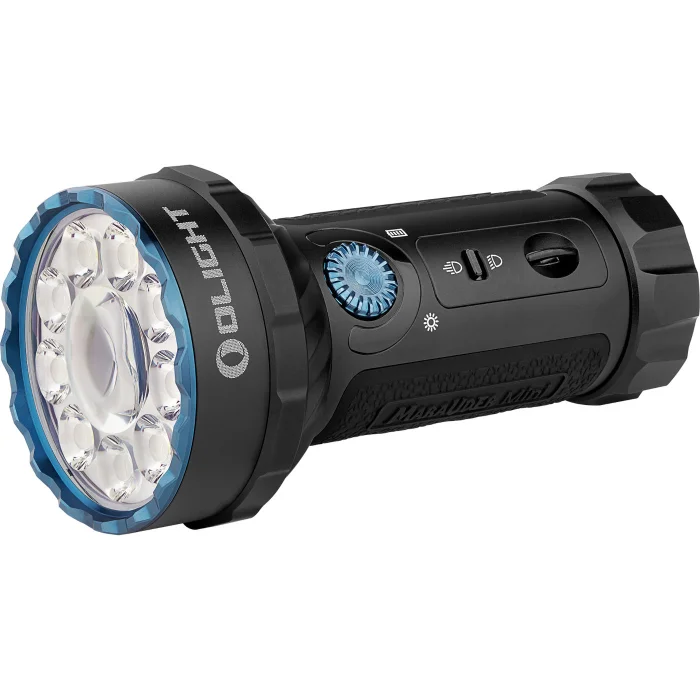
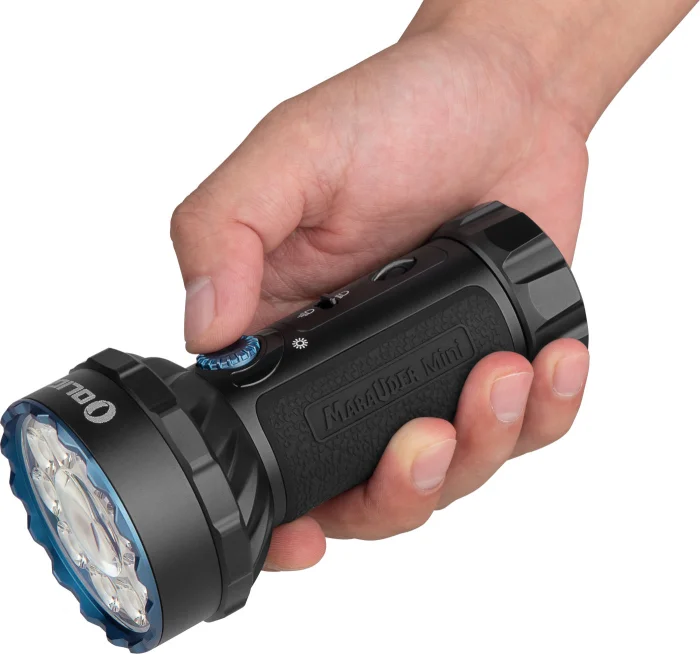
Why a zoom function on the flashlight?
- Adjustable light cone between spot and flood
- Spot – long range for distant observation
- Flood – wide illumination for close range and pathfinding
- Sliding or rotating mechanism, one-handed operation
- Only one lamp instead of two specialist lamps
How does the zoom system work?
Two design principles dominate in zoomable flashlights. Lens system – a convex lens in front of the LED is mechanically shifted (via slider head or rotating ring). In focus the lens creates a sharp spot, out of focus a wide flood. Advantages: simple build, robust. Disadvantages: light is lost through the lens, in spot mode the LED shape clearly maps (often as a rectangular «LED image»). Reflector system – in premium lamps the reflector is adjusted, creating cleaner beam patterns but more complex mechanics.
When is zoom sensible, when not?
Zoom is an all-purpose solution with clear use cases:
-
Sensible: outdoor all-purpose lamp – illuminate paths, check distant traces
-
Sensible: hobby and DIY – flexible use indoors and outdoors
-
Sensible: car and breakdown set – engine bay inspection and emergency lighting
-
Less sensible: EDC – mostly too small for effective zoom
-
Less sensible: tactical – specialised beam patterns superior
-
Less sensible: diving – moving parts are weak points
What to look for when buying?
Most important: the zoom mechanism must be robust. Sliding heads are more prone to dirt ingress and may loosen over time – check whether the movement is cleanly guided. Rotating rings are usually more robust. Look for O-ring seals – with zoomable lamps waterproofness is often compromised. Check spot beam pattern: many cheap zoom lamps show the LED shape clearly in spot mode (rectangular or with focal spot) – in premium models this is avoided through optical design. A pure spot or flood lamp often delivers a better beam pattern than a compromised zoom lamp – check whether the use case really needs zoom.
- ✓ Outdoor all-purpose users (hiking, camping)
- ✓ Hobby and DIY users
- ✓ Car drivers and breakdown kit holders
- ✓ Home emergency planners
- ✓ Users with mixed requirements without specialisation