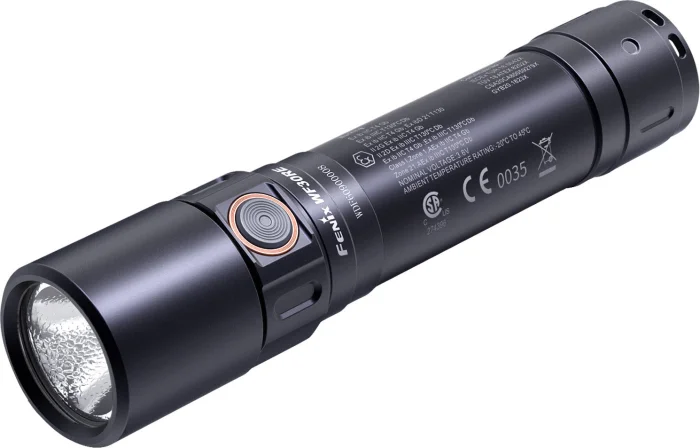
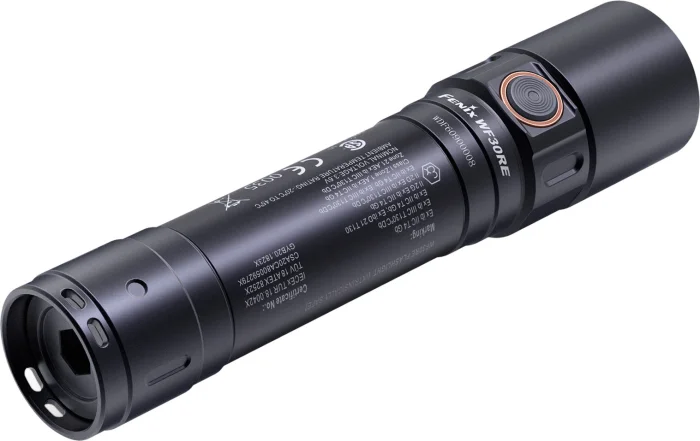
Fenix WF30RE rechargeable ex-proof flashlight
99.00 CHF *

ATEX-certified flashlights are constructed so they form no ignition source in explosion-hazardous areas (chemistry, petrochemistry, mining, gas plants, paint shops) – even in case of defect. They are subject to strict standards and classified for defined Ex zones.
ATEX distinguishes two material categories and three probability zones. Gas/vapours: Zone 0 (hazard atmosphere constant), Zone 1 (occasional), Zone 2 (rare). Dusts: Zone 20, 21, 22 with the same logic. A flashlight certified for Zone 1 may be used in Zone 1 and Zone 2 but not in Zone 0. For Zone 0 (highest requirement) only a few specialised models exist. When buying it must be clear which zone is to be covered.
ATEX requirements exist in areas with potential explosion atmosphere:
Most important: the ATEX certification must match the actual zone. A light with insufficient certification cannot be legally used, an over-dimensioned one is unnecessarily expensive. Check the certificate: ATEX marking includes equipment group (II for industry outside mining), category (1G/2G/3G for gas zones), temperature class (T1-T6) and IP rating (IP66 or higher). For international use additionally check IECEx certification. Watch cold and heat tolerance (typically -20 °C to +60 °C). Charging concept: in Ex zones charging inside the zone is forbidden – the lamp must be brought outside for visual check or charging.
Zone 0 is for areas with constant explosion atmosphere, Zone 1 for occasional, Zone 2 for rare. For most industrial routine tasks Zone 1 is enough. Zone 0 is only required in tank interiors or similarly critical areas – check operational Ex protection documentation.
ATEX is the EU norm (mandatory in EU/EFTA), IECEx is the international norm. Many premium manufacturers certify under both standards – important for globally deployed lights. For Swiss users ATEX is primary, IECEx a bonus.
No. Charging must take place in a non-Ex area. ATEX certifications exclude charging operations from the protected area – battery exchange is also usually only allowed outside. Exceptions exist only with special ATEX charging stations.
ATEX lights are robustly constructed (often 5-10 years lifespan in professional use). Important: regular inspection of housing integrity and seals is mandatory. A damaged ATEX light loses its certification – immediate withdrawal.
Original goods from Swiss stock · Free shipping over CHF 100 · Personal advice