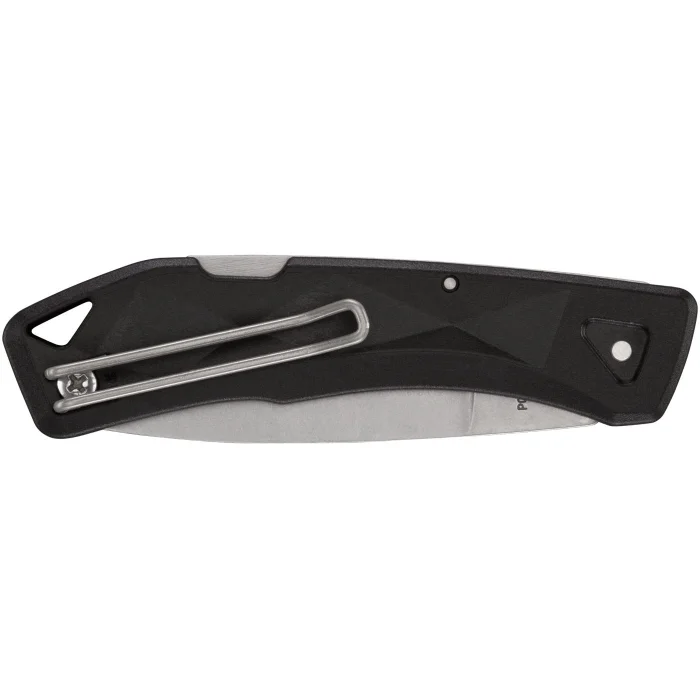
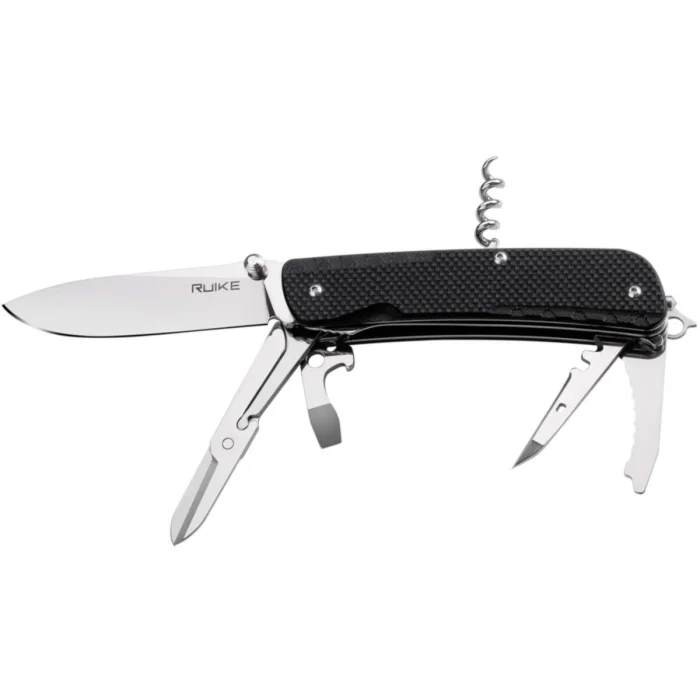
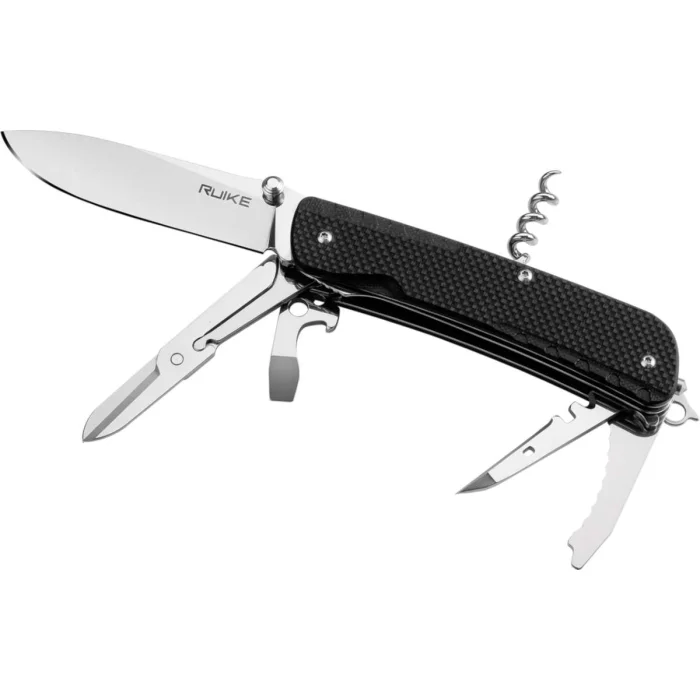
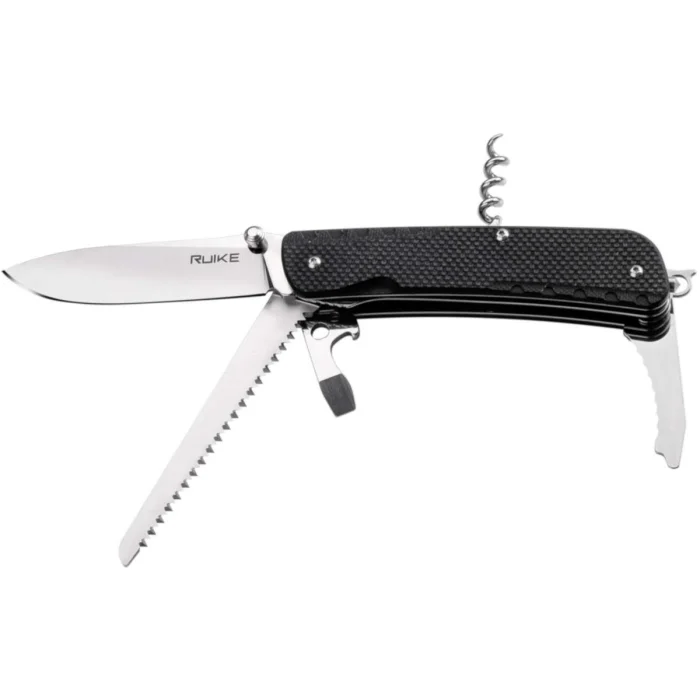
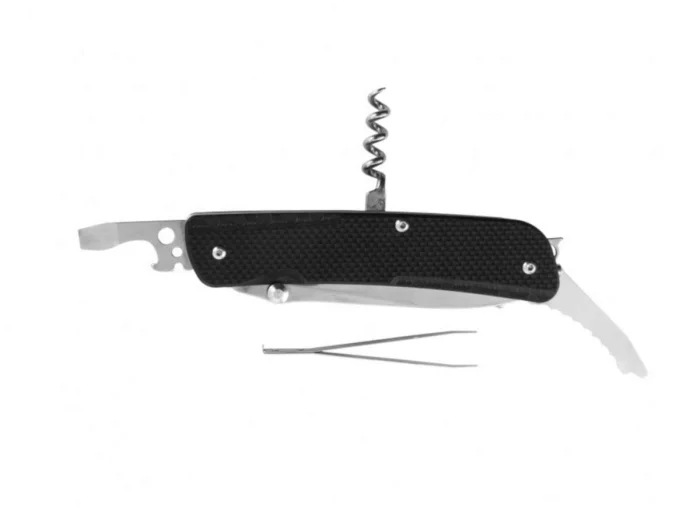
What defines a folding knife?
- Folding blade with locking system – Liner Lock, Frame Lock, Lockback or classic Slipjoint
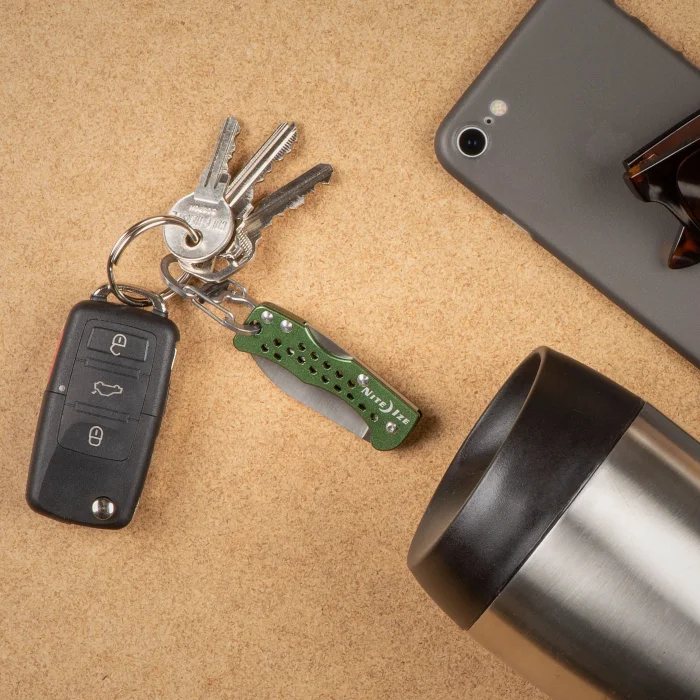
- Pocket-friendly and compact, models from around 60 g
- Blade lengths usually 6 to 10 cm – freely available under Swiss weapons law
- Blade steels like 14C28N (Sandvik), 8Cr14MoV, D2 or 154CM for sharpness and corrosion resistance
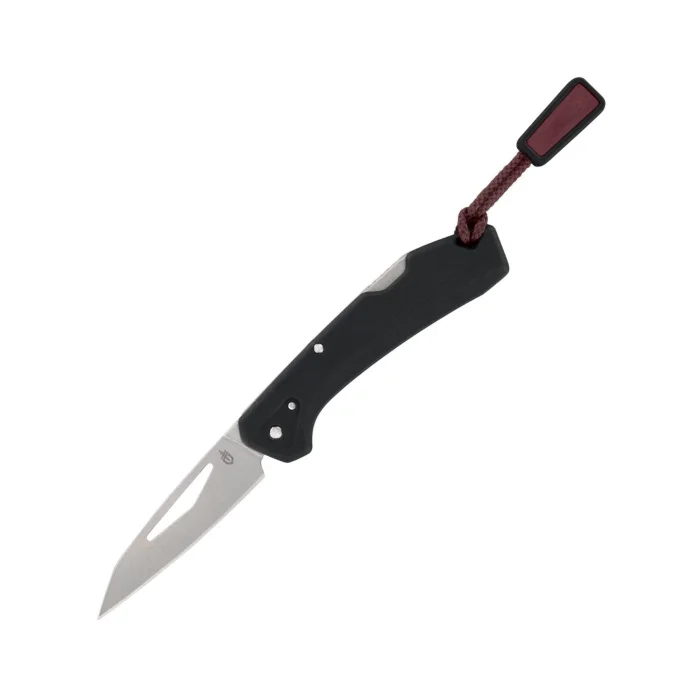
- Blade shapes from Drop Point (all-round) through Tanto (tactical) to Wharncliffe (controlled draw cut)
- Opening mechanisms like thumb stud, thumb hole, flipper tab or wave opener for one-handed use
When does a folding knife fit?
A folding knife is the compact all-purpose solution for anyone who wants to carry a knife at all times without depending on a belt or holster. Equally usable in EDC (Every Day Carry), on day hikes, while camping, in the garden or in the toolbox. Typical tasks: opening packages, cutting cord and tape, whittling firewood for a campfire, cleaning mushrooms, cutting an apple, small repairs at camp. For light whittling and simple woodwork, a folding knife with a solid blade lock is also suitable.
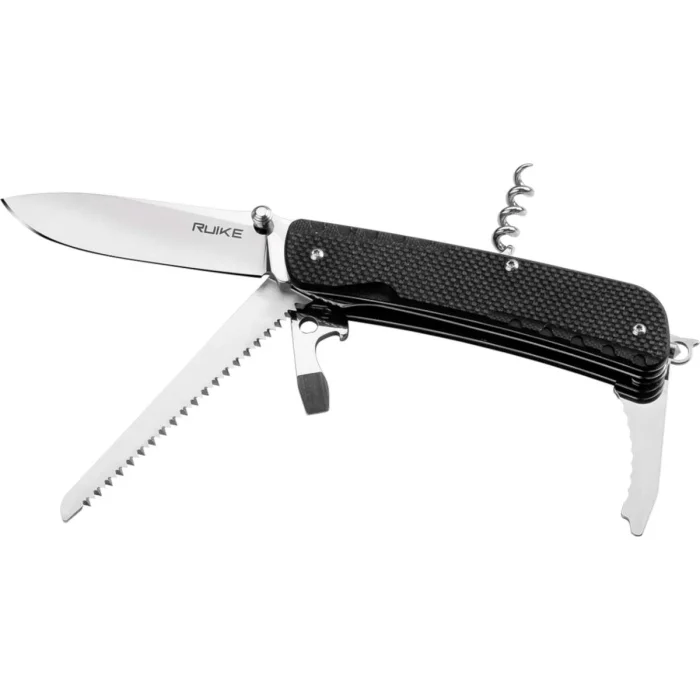
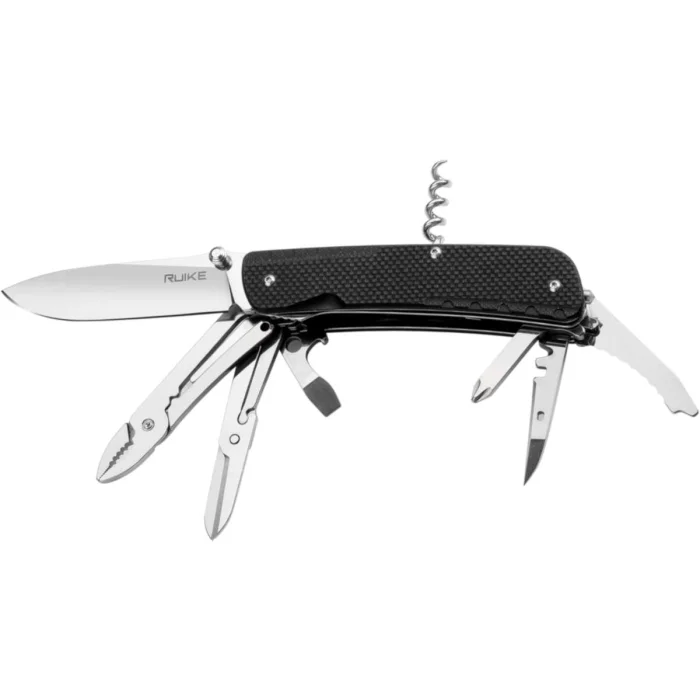
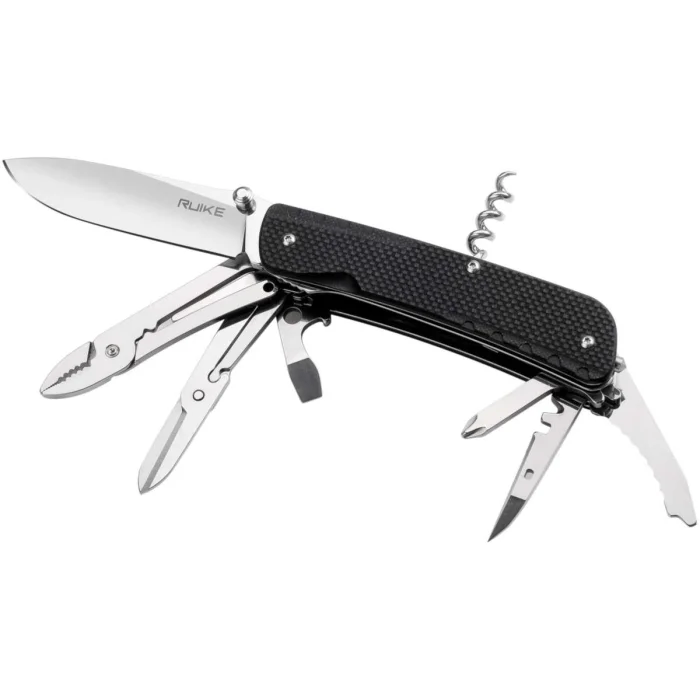
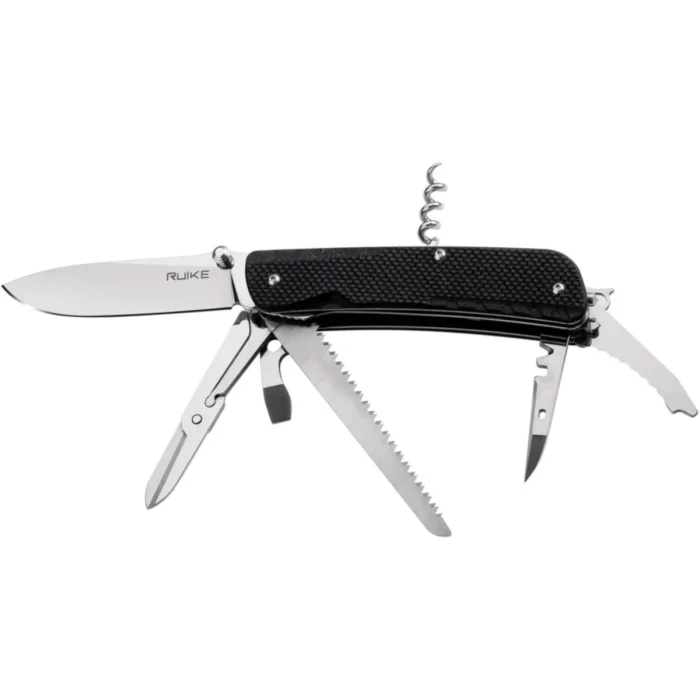
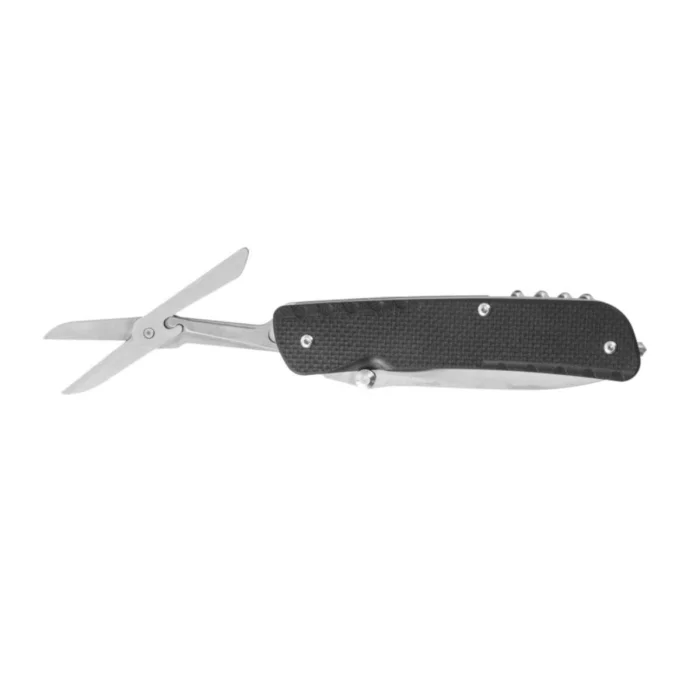
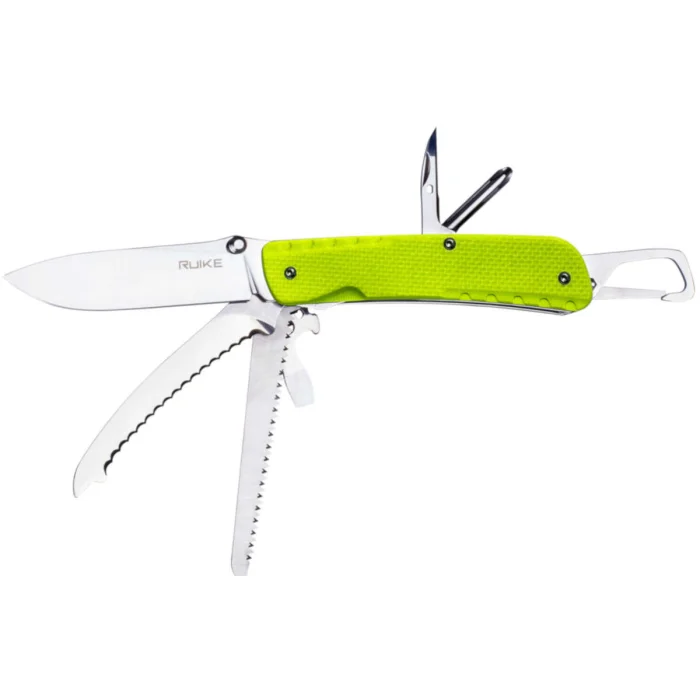
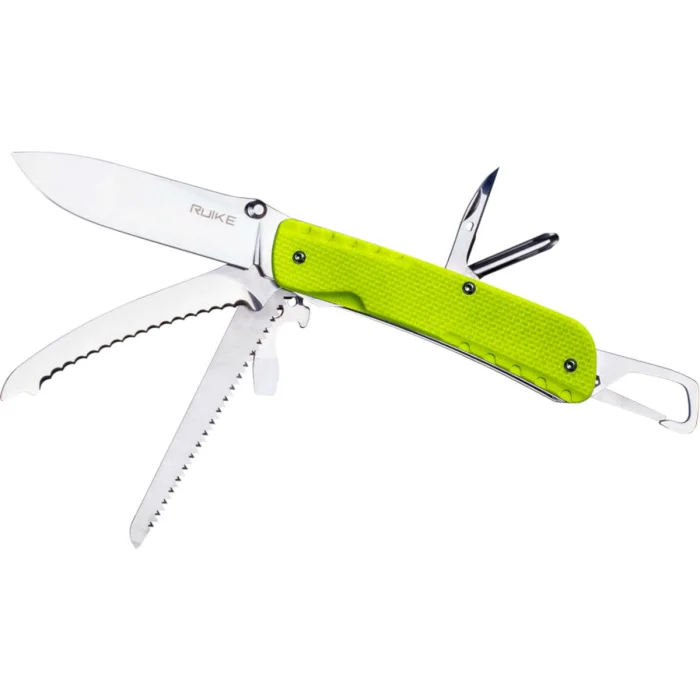
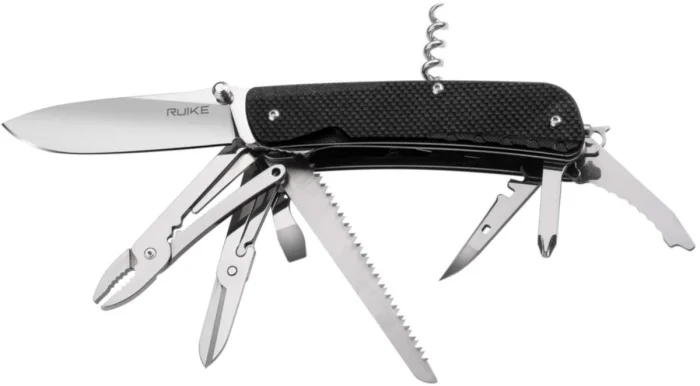
For tasks involving sustained lateral load – such as batoning, heavy prying or bushcraft with pressure on the spine – a fixed-blade knife is the more robust choice. If you need several tools in one device (screwdriver, corkscrew, scissors), a classic Swiss Army Knife is the way to go. For coarse woodwork and dense growth, complement with machetes or carving tools. A folding knife is therefore not a universal replacement, but the mobile companion you carry every day.
Which folding knife concepts exist?
Folding knives differ above all in their locking mechanism, the system that fixes the blade in the open position:
-
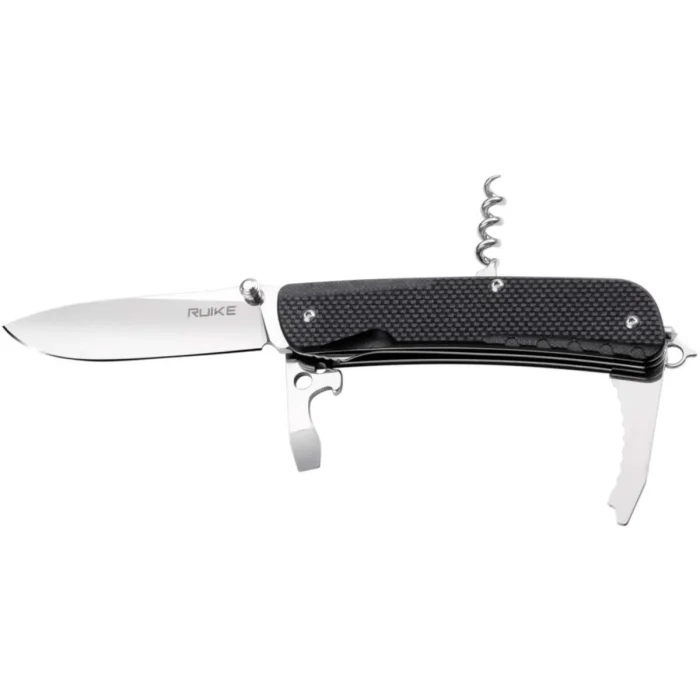
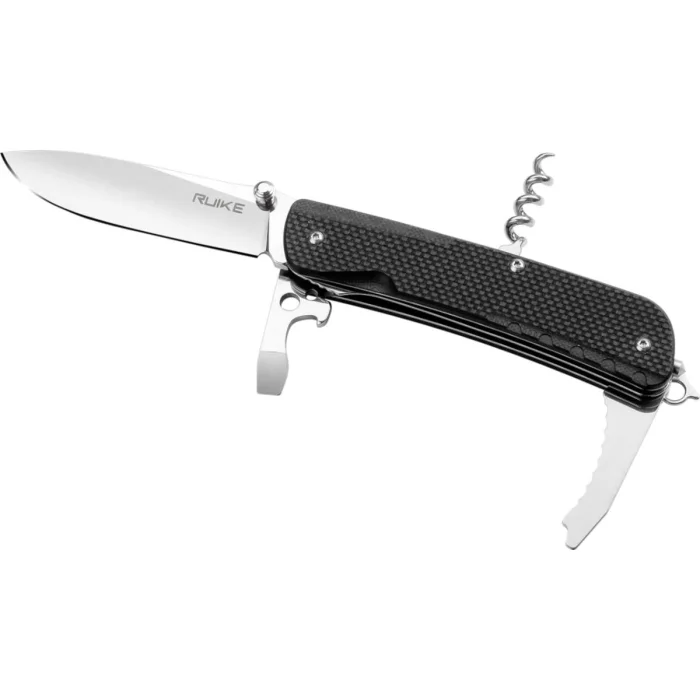
Liner Lock – A spring-loaded inner liner snaps sideways behind the blade. One-handed use, lightweight, very widespread on modern EDC knives (Ruike P series, Gerber Remix).
-
Frame Lock – Like Liner Lock, but the entire handle scale serves as the lock. More stable under dynamic load, often on premium models.
-
Lockback (Back Lock) – Classic rocker mechanism on the back of the handle. Very secure, two-handed to open and close, traditional on hunting and outdoor folding knives.
-
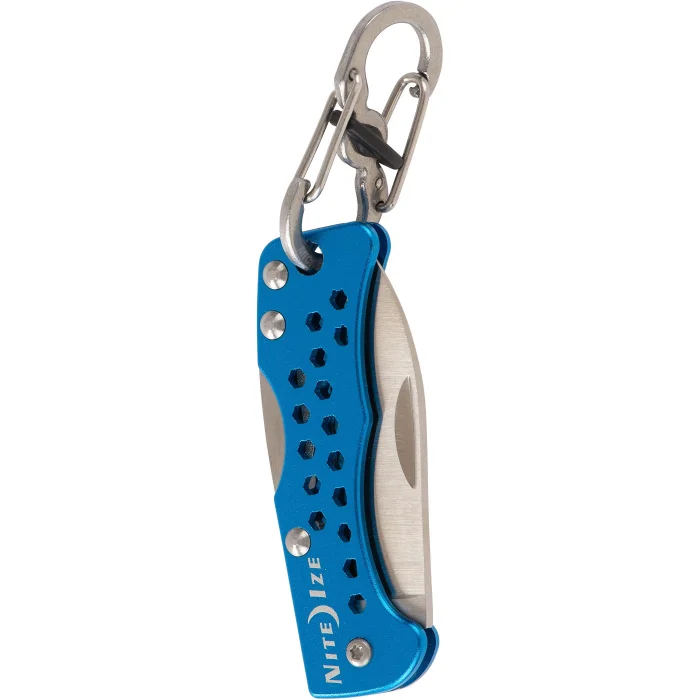
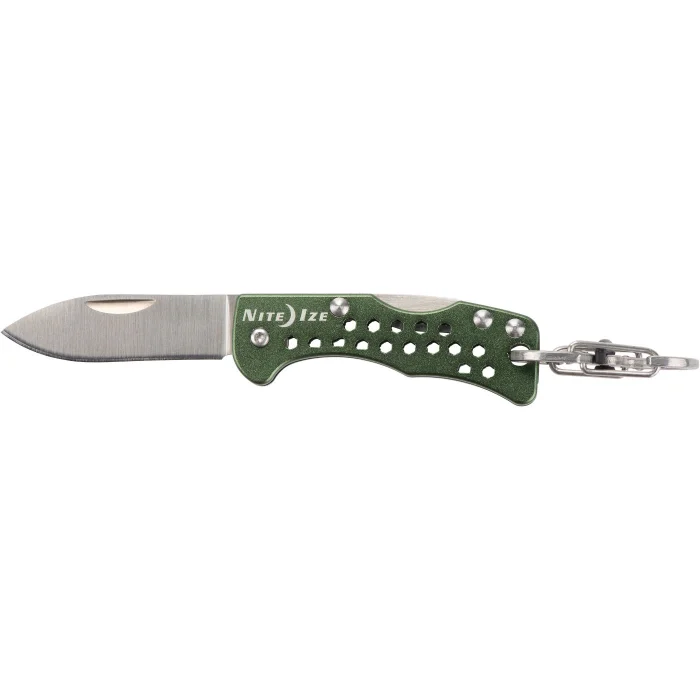
Slipjoint – No real lock, the blade is held open only by spring tension (Swiss Army Knife principle). Inconspicuous legally and ideal for fine cutting tasks.
-
Beta-Plus Lock – Ruike’s in-house development: double protection against unintentional closure, characteristic of the Ruike P series.
-
Multifunctional – Folding knives with additional tools like glass breaker, seatbelt cutter or bottle opener for emergency and rescue use (Gerber Remix Tactical, Camillus CenterFire).
A second distinguishing feature is the opening mechanism: thumb stud (small pin on the blade), thumb hole (Spyderco style, larger hole in the blade) and flipper tab (lever on the back of the blade, operated with the index finger) are the three most common. All allow one-handed opening with a flick of the wrist combined with thumb or finger movement. Classic slipjoint knives without these aids require both hands – that’s by design, because they’re intended for fine cutting work.
Which blade shape do you need?
The blade shape determines what a folding knife is best suited for. The range covers six to seven main shapes:
| Blade shape | Characteristic | Best for |
|---|
| Drop Point | Gently sloping spine, broad robust tip | All-purpose, outdoor, EDC |
| Clip Point | Curved spine, fine pointed tip | Hunting, fine piercing, classic look |
| Tanto | Straight main edge, angled secondary tip | Tactical, piercing tough materials |
| Wharncliffe | Completely straight edge, straight tip | Precise draw cut, whittling |
| Sheepsfoot | Straight edge, rounded spine without tip | Safe cutting, rescue, animal care |
| Spearpoint | Symmetrically tapered, central tip | Piercing, all-purpose with symmetry |
| Reverse Tanto | Straight edge, top angled to point | Modern EDC with extra precision |
For the broadest range of use, Drop Point is the safest choice. Tanto blades specialise in tactical and piercing tasks. Wharncliffe and Sheepsfoot are the choice when you cut very controlled in a draw motion or want to work without piercing risk.
Blade steels compared
The steel determines three properties: edge retention (how long does the blade stay sharp?), corrosion resistance (how immune is it to moisture and salt?) and ease of resharpening (how easy is it to bring back to sharp?). The steels in our range cover the most important mid-range classes:
| Steel | Hardness (HRC) | Properties | In our range |
|---|
| 14C28N (Sandvik) | ~58–60 | Very balanced, high corrosion resistance, easy to resharpen | Ruike P series |
| D2 | ~58–62 | Tool steel, harder, better edge retention, somewhat rust-prone | Selected models |
| 8Cr14MoV | ~57–58 | Affordable all-rounder, easy to resharpen, medium edge retention | Entry-level |
| AUS-8 | ~58 | Japanese classic, good corrosion resistance, balanced | Camillus, older models |
| 154CM | ~58–61 | Premium tier, high edge retention, very good corrosion resistance | Selected Camillus |
For everyday use, 14C28N is the gold standard in the mid price segment – not without reason has Ruike committed almost entirely to it. D2 is worthwhile if edge retention matters more to you than easy maintenance; in damp outdoor conditions you then need a bit more discipline (drying, light oiling). 8Cr14MoV is perfectly fine for a first knife or a backup in the toolbox.
What to look for when buying
Five factors decide which folding knife fits your use:
-
Blade length – For EDC, 7 to 8 cm is enough; for outdoor and hunting, 8 to 10 cm is preferable. Blades under 6 cm are elegant for EDC but often too short for robust tasks.
-
Blade steel – 14C28N is the balanced mid-range standard, D2 the more edge-retentive option, 8Cr14MoV the affordable entry point. Premium steels like M390 or S30V are not found at Ruike, Gerber, Camillus or BCB – those sit in a higher price tier.
-
Locking system – Frame Lock for maximum stability, Liner Lock for low weight, Lockback for tradition and two-handed use. Ruike’s Beta-Plus Lock is a sensible extension of the Frame Lock with added safety.
-
Handle material and ergonomics – G10 (glass-fibre laminate) and FRN are robust, light and grippy even when wet. Aluminium is light and elegant, but slipperier without texture. Stainless steel frames are heavy but particularly stable. Watch the grip length: your extended middle finger shouldn’t be able to touch the base of the thumb.
-
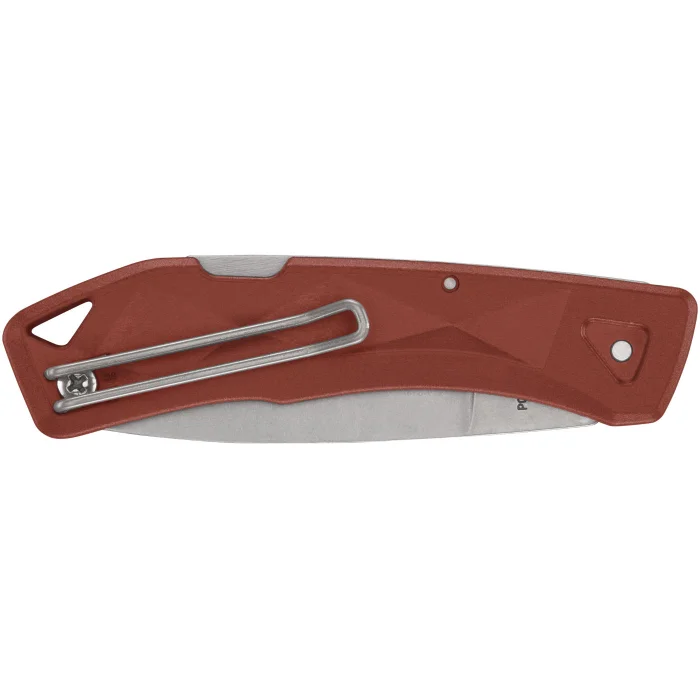
Pocket clip and carry comfort – A pocket clip makes the difference between “always with you” and “forgotten in the drawer”. Tip-up carry (blade up in the pocket) is standard, some models allow tip-down. Check whether the clip is reversible if you’re left-handed.
For a complete overview of all folding knives, see the main category Knives & Tools; for special types check hunting knives and one-handed knives.
Brands in our range
Ruike – the focus in the mid-range segment
Ruike (Chinese premium manufacturer, founded 2014) is the focus of our range for modern outdoor and EDC folding knives. Characteristic: 14C28N Sandvik steel across the entire range, Beta-Plus Lock as a hallmark, very clean workmanship and a fair price-to-performance ratio. The P series is the main line for EDC and outdoor (P108, P121 Hussar, P128, P135, P801, P841, P852), while the D series and LD series add compact slipjoint models for general-purpose tasks.
Gerber – American classic
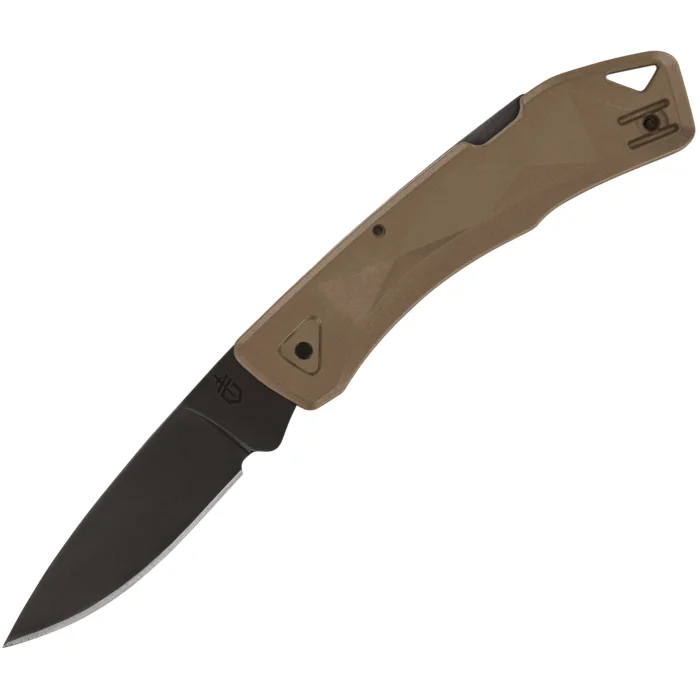
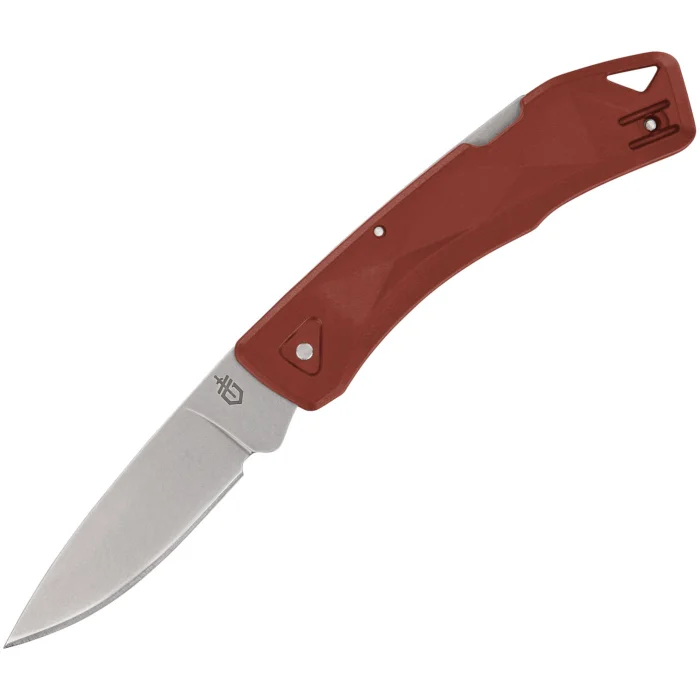
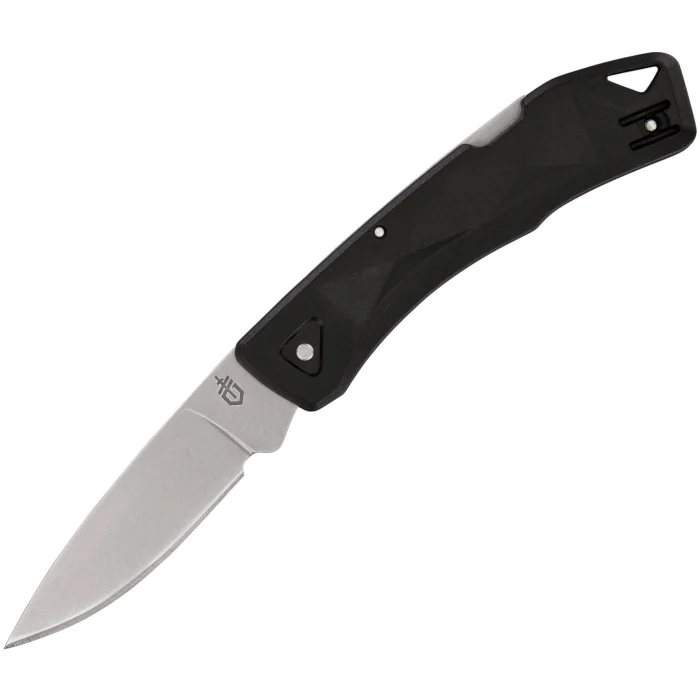
Gerber Gear (USA, since 1939) is the established American brand for robust outdoor and tactical knives. Represented in our folding-knife range with the Remix series (compact EDC with thumb hole) and the US1 pocket knife. Trademarks: uncompromising functionality, ergonomic handles and affordable entry-level prices with solid quality.
Camillus – tradition with modern accents
Camillus (USA, founded 1876, one of the oldest knife makers in North America) blends tradition with modern materials. Our range includes the CenterFire 30-30 folding knife with multifunction (glass breaker, seatbelt cutter) for emergency and rescue. Blade steels range from AUS-8 to 154CM.
BCB – survival and emergency equipment
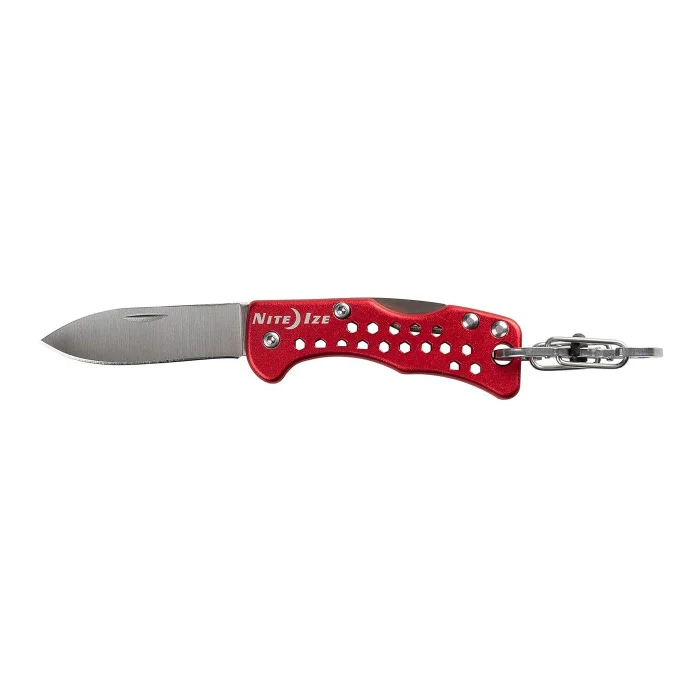
BCB International (UK, since 1854) specialises in survival and emergency equipment for outdoor and military use. In our folding-knife range with the compact Mighty One-Handed Mini Knife – a light keychain and emergency knife for EDC and first-aid kits.
Who is a folding knife made for?
- ✓ EDC carriers who keep their knife in the pocket every day
- ✓ Hikers, campers and outdoor users without a bulky fixed-blade knife
- ✓ Hunters as a compact addition to the fixed gutting knife
- ✓ Tradespeople and technicians as a reliable working knife
- ✓ First responders and rescue personnel using multifunction models
- ✓ Travellers and city dwellers with compact EDC needs
- ✓ Collectors of Ruike, Gerber and Camillus models with refined steel