Filters and sort order
1 Items
more filters
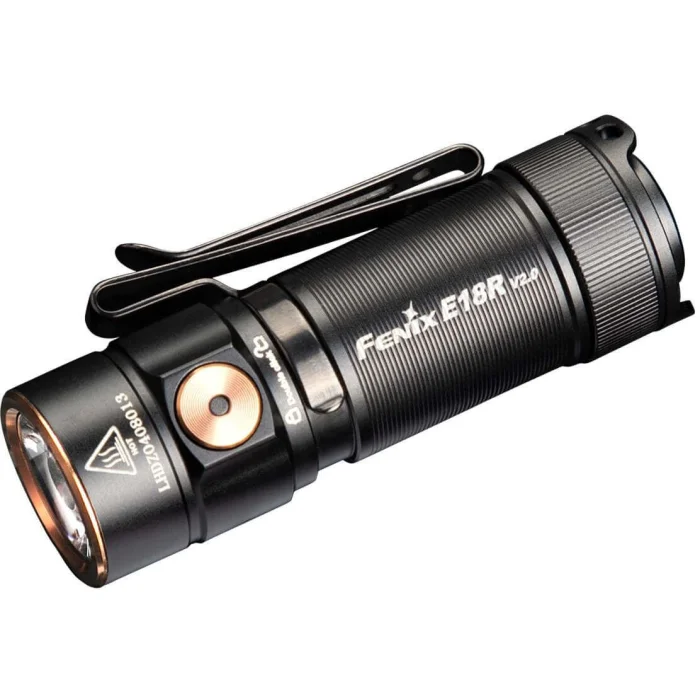
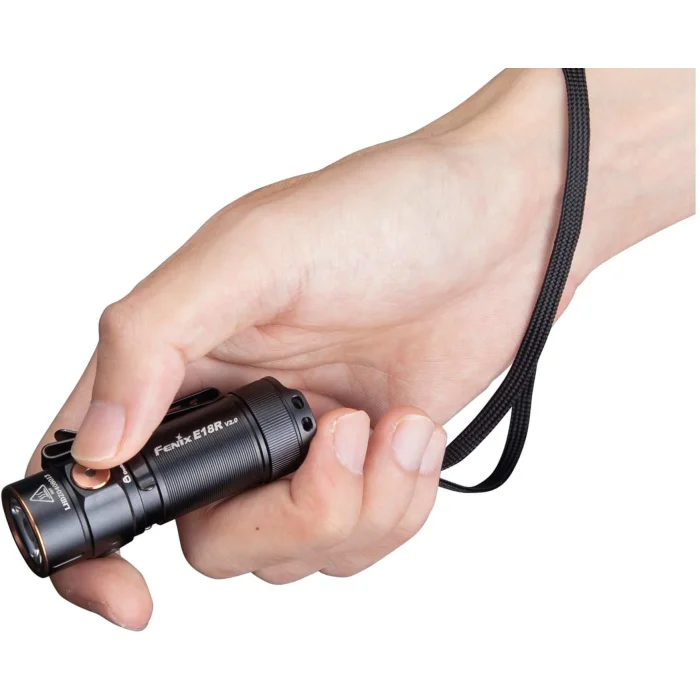
- SKU: E18R V2.0
- GTIN: 6942870308944

A strobe function in the flashlight emits rapid pulsating light flashes (typically 8-15 Hz). In self-defence it can briefly disorient an attacker, in emergencies it serves as self-signalling, and in sports as motion analysis. Available as primary mode on tail-switch lights or as hidden mode on more civilian models.
Rapid pulsating light flashes (typically 8-15 Hz, i.e. 8-15 times per second) significantly impair eye adaptation. The human eye cannot adapt to either light or dark because both alternate several times per second. This can lead to short-term disorientation, dizziness or nausea. The effect is not equally strong in everyone – some react intensely, others barely. Strobe affects animals similarly.
Strobe is mostly not the standard mode – that would be disturbing. Manufacturers integrate it in different ways:
Most important: the operation must match the application. Tactical users need instant access via tail-switch, civilian users a hidden mode is enough. Check whether the frequency is fixed (8-15 Hz) or variable (some premium models offer two frequencies). Pay attention to high light output in strobe mode – weak strobe has no disorienting effect. Battery drain is moderate: strobe draws less power than continuous maximum because the LED is only active 50 % of the time.
A flashlight with strobe function is legal as a tool. Actively shining at a person to blind them can be assessed legally depending on the situation – self-defence is allowed, intentional blinding of road users or police is not.
Studies show 8-13 Hz are particularly disorienting – this corresponds to typical brain activity frequencies. Some manufacturers also use higher frequencies (15-20 Hz) or irregular pulse patterns for stronger effect.
In daylight the effect is significantly reduced because the eyes are already adapted to brightness. For effective use, strobe is a night or twilight function.
In photosensitive individuals (about 1 % of the population), pulsating lights can trigger epileptic seizures. This is a known effect – strobe should not be used in public spaces without necessity.
Original goods from Swiss stock · Free shipping over CHF 100 · Personal advice
| id | title | price | manufacturer |
|
from *
/ |