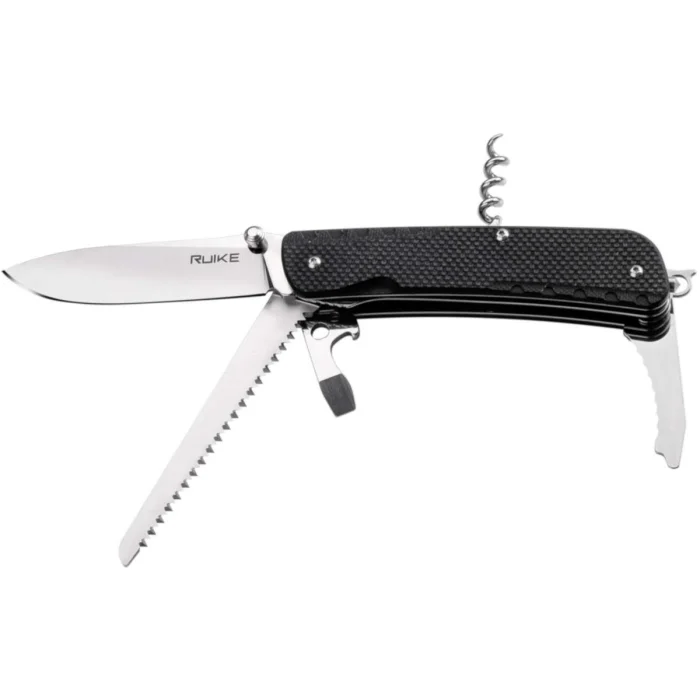
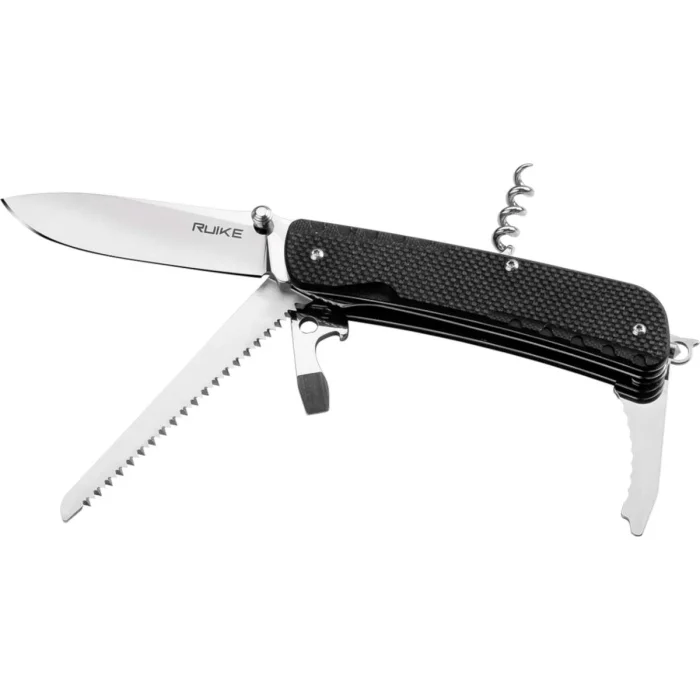
What defines an emergency knife?
- Specialised rescue functions: hook blade, glass breaker, seatbelt cutter, strap cutter
- Protected blades to prevent injury to the victim during cutting
- Compact format: many folding knives and smaller fixed blades for EDC capability
- Blade lengths 6 to 12 cm – designed for rescue, not for outdoor batoning
- Multiple steel grades: 14C28N, 12C27, D2, Beta+ – all stainless for emergency storage
- Freely available in Switzerland, no justified reason required (Article 4 Weapons Act)
What is an emergency knife?
The emergency knife is the specialist branch for urban rescue use: designed for EMS personnel, fire department, police and private individuals who need a targeted tool for emergencies in the car, in the first aid kit or as EDC. Characteristic are not large blades for batoning, but protected hook blades, dedicated seatbelt cutters and compact folders with integrated glass breaker. The central design philosophy: the tool must be quickly available, one-hand operable and deployable without injury risk to the person being rescued.
If you need a robust tool with a large blade and outdoor survival properties in the forest or wilderness, a survival knife with Full Tang and MOLLE sheath is the focused choice. If you generally look for a fixed blade for outdoor tasks, check the fixed blade category. For pure EDC with Swiss-pocket-knife character, look at one-handed knives or folding knives. The emergency knife is the dedicated rescue variant: more specialised than a normal EDC folder, more compact than an outdoor survival knife, with targeted functions for medical emergencies or vehicle extrication.
Emergency functions at a glance
The emergency knives in our range combine five central rescue functions, often in a single tool:
| Function | Purpose | In our range |
|---|
| Hook blade | Protected hook shape, cuts clothing, belts and fabric safely without injuring the skin | Gerber Crisis Hook Knife |
| Strap cutter | Dedicated tool or integrated hook blade on blade or handle – cuts seatbelts and ropes | Gerber Strap Cutter Rescue Tool, Ruike M195 |
| Glass breaker (striking pommel) | Hardened steel pommel at the end of the handle, shatters safety glass in emergency situations | Ruike M195, Ruike LD43 rescue knife |
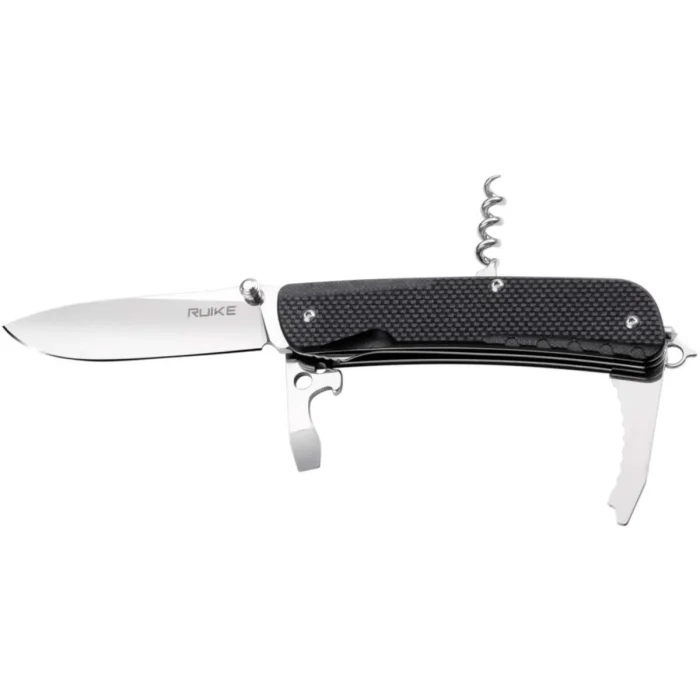
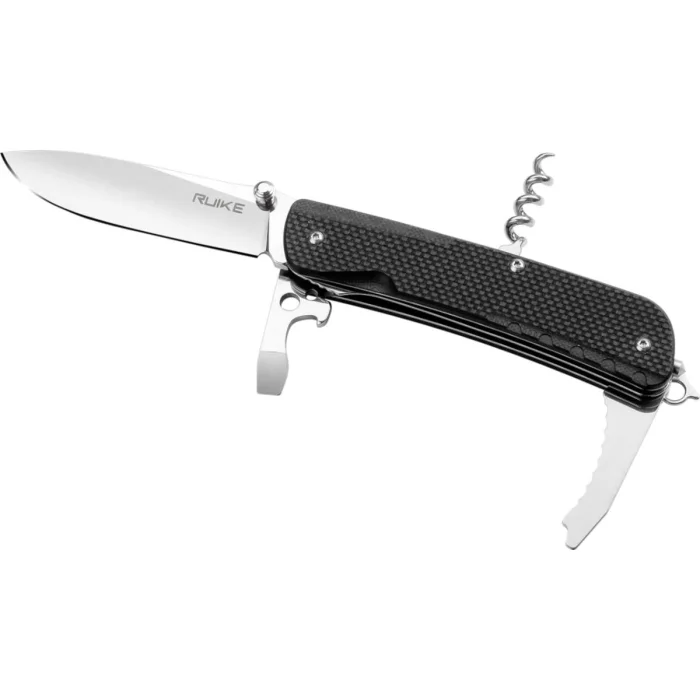
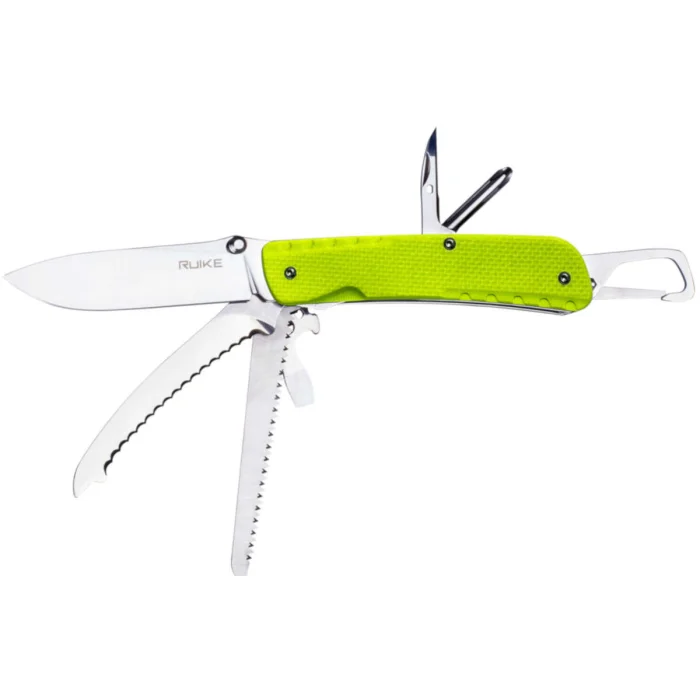
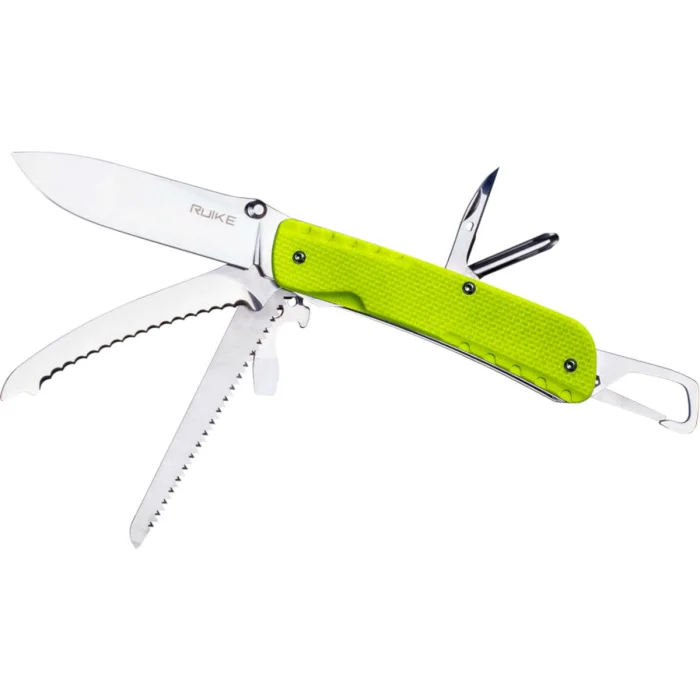
| Serrated blade | Aggressively cuts through ropes, plastic and tough material faster than plain blades | Ruike LD series folders, Gerber Strap Cutter |
| One-hand operation | Thumb stud, flipper or hook blade allows opening with one hand – the other holds the patient | All Ruike folding knives in our range |
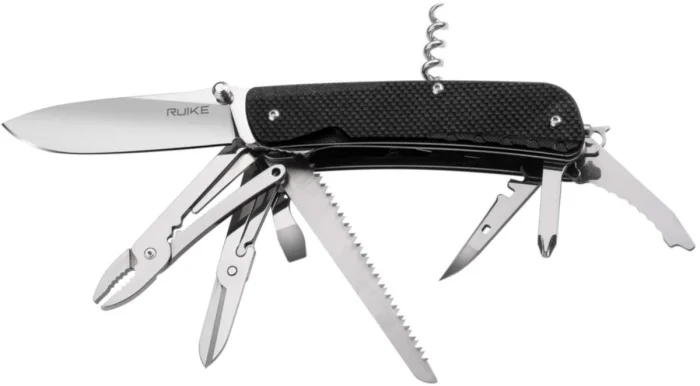
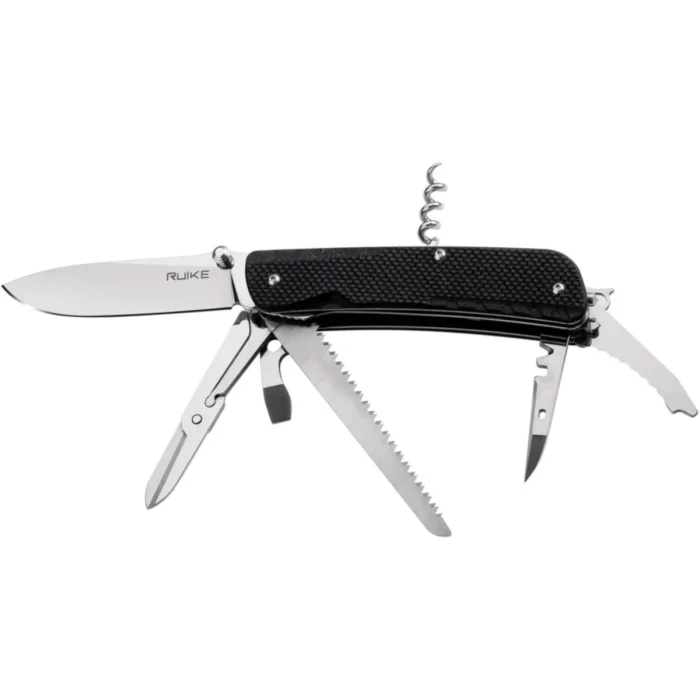
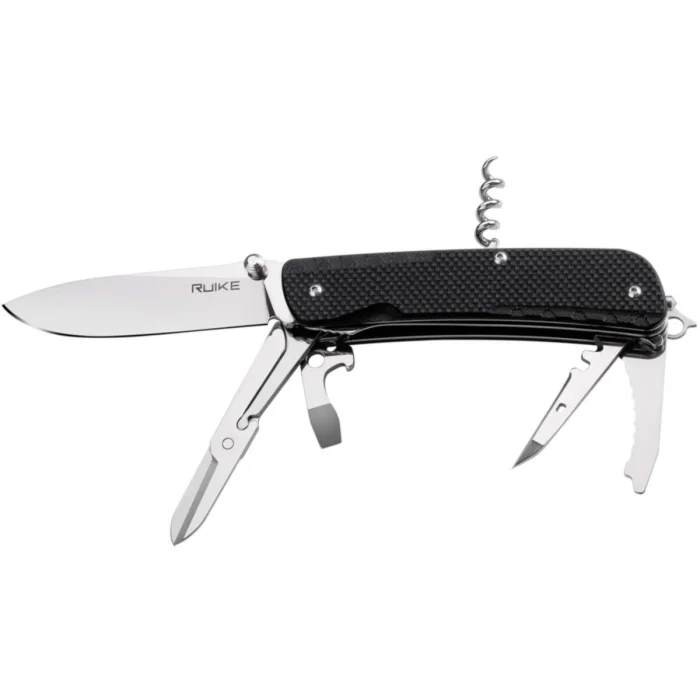
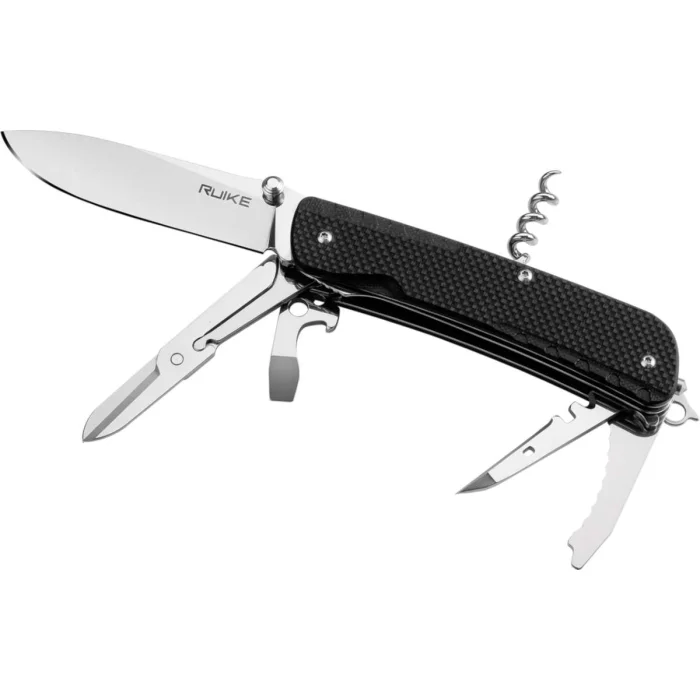
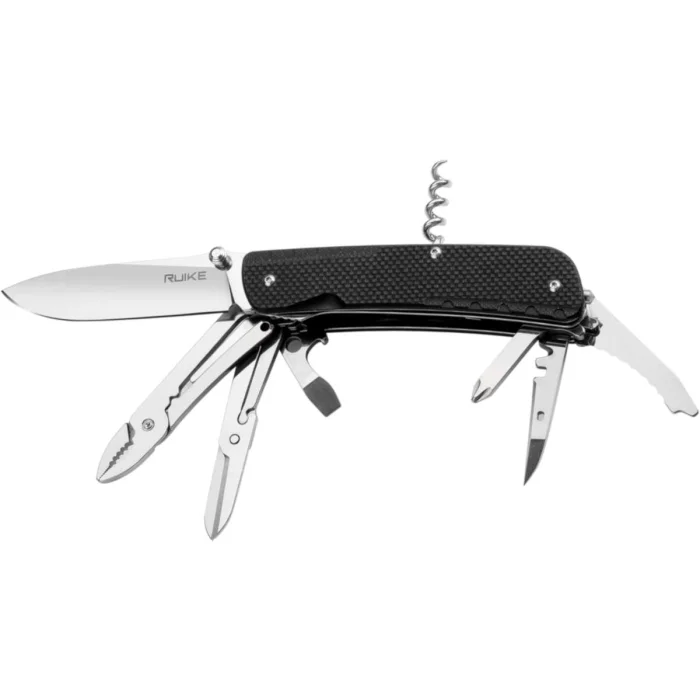
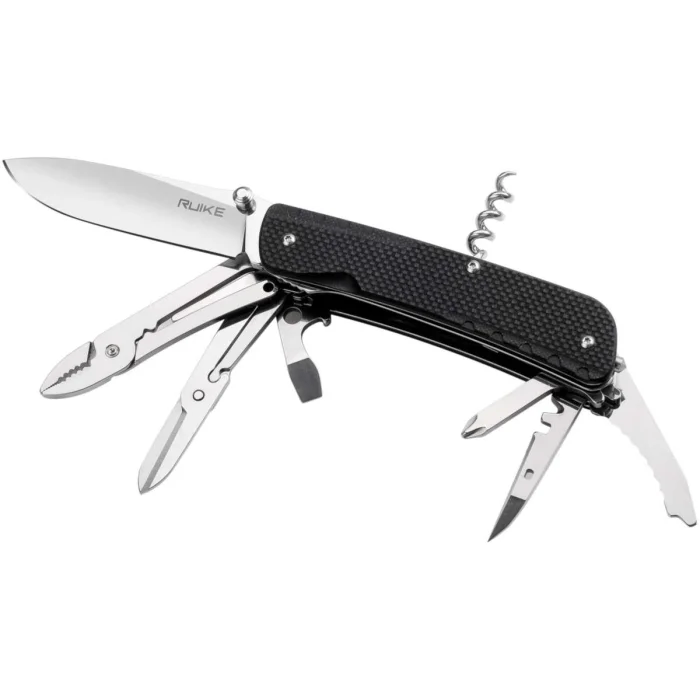
Not every emergency knife has all five functions. The Gerber Crisis Hook Knife is highly specialised on the hook blade and is designed as an EMS knife. The Ruike M195 rescue knife is the all-rounder with glass breaker, seatbelt cutter and drop-point blade. The Ruike LD43 is the specialised folding rescue knife with serration and one-hand operation. For EDC with emergency reserve, the Ruike LD and P folding knives are suitable.
Use cases and matching models
Depending on the field of use, different emergency knives are suitable:
| Field of use | Requirement | Recommended model |
|---|
| EMS / emergency services | Hook blade for clothing, one-handed, no injury risk | Gerber Crisis Hook Knife |
| Fire department / first aiders | Seatbelt cutter, glass breaker, robust blade | Ruike M195 rescue knife |
| Car bug-out / vehicle extrication | Glass breaker, seatbelt cutter, compact in glove compartment | Ruike LD43 rescue knife, Ruike M195 |
| First aid kit / travel bag | Dedicated strap cutter, small and safely stowable | Gerber Strap Cutter Rescue Tool |
| EDC with emergency reserve | All-purpose folder with serration option | Ruike LD series (LD11, LD21, LD31) |
| Outdoor survival with rescue aspect | Fixed blade, Full Tang, larger blade | Gerber LMF II Infantry, Ruike F186 |
Blade steel and care
For emergency knives, steel selection is more important than for pure outdoor knives: the tool often sits unused in the first aid kit, glove compartment or duty belt for months. Three requirements are central: corrosion resistance (no carbon), edge retention (tough materials like belts and composite clothing are hard on the blade) and simple resharpenability (in use, there is no time for elaborate sharpening systems).
-
14C28N (Sandvik) – Ruike standard. Low-maintenance, balanced all-rounder with good edge retention and easy sharpenability. First choice for emergency knives.
-
D2 tool steel – Ruike F186. Very edge-retentive, cuts aggressively. However slightly rust-prone – only recommended in emergency setup with regular care.
-
Beta+ (Ruike proprietary recipe) – In the LD and P series. Improved toughness over 14C28N, good properties for EDC with emergency reserve.
-
12C27 (Sandvik) – In more affordable folders. Solid stainless choice in the mid-range, easy to maintain.
Important: Carbon steel is not recommended in the emergency knife segment. It rusts without regular care, and in an emergency, time is typically missing. All recommended emergency knives are made of stainless steels.
What to look for when buying
Six factors decide which emergency knife fits your use:
-
Level of specialisation – Dedicated rescue tool (Crisis Hook, Strap Cutter) for professionals, all-purpose emergency knife (Ruike M195) for broad use, or EDC folder (Ruike LD11) with emergency reserve.
-
Hook blade or straight blade – Hook blade is safer when cutting directly on the body, straight blade more versatile. Professional EMS choose hook blade; generalists the straight blade.
-
Folder or fixed blade – Folder is more compact and more practical in EDC, fixed blade is more quickly available and more robust. For the first aid kit a folder is enough; for the duty belt rather a fixed blade.
-
Glass breaker – Indispensable in the car setup. Ruike M195 and LD43 have one integrated; the Gerber Crisis Hook Knife does not, as it is a pure EMS knife.
-
Blade steel – Stainless (14C28N, Beta+, 12C27) is mandatory in the emergency setup. Carbon is unsuitable here.
-
Carrying system – Belt clip for EDC, Kydex sheath for duty belt, MOLLE for vest mounting.
For a complete overview of all knives, look at the main category Knives & Tools; related filters under survival knives, outdoor & survival knives and one-handed knives.
Brands in our range
Gerber – specialised rescue tools
Gerber Gear (Portland, Oregon, USA, since 1939) is represented in the emergency knife range with three clearly profiled models. The Crisis Hook Knife is the EMS specialist tool with protected hook blade – designed primarily for EMS personnel and first aiders who must safely cut clothing, belts or bandages without injuring the patient’s skin. The Strap Cutter Rescue Tool is the dedicated seatbelt cutter without a blade in the classic sense – pure rescue instrument for fire department, EMS and car bug-out. The LMF II Infantry Coyote rounds out the range as a robust all-round emergency and survival knife.
Ruike – Chinese rescue and EDC specialist
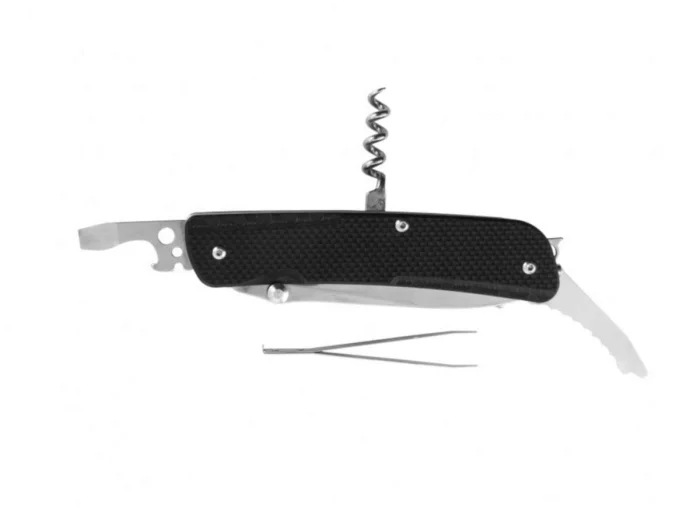
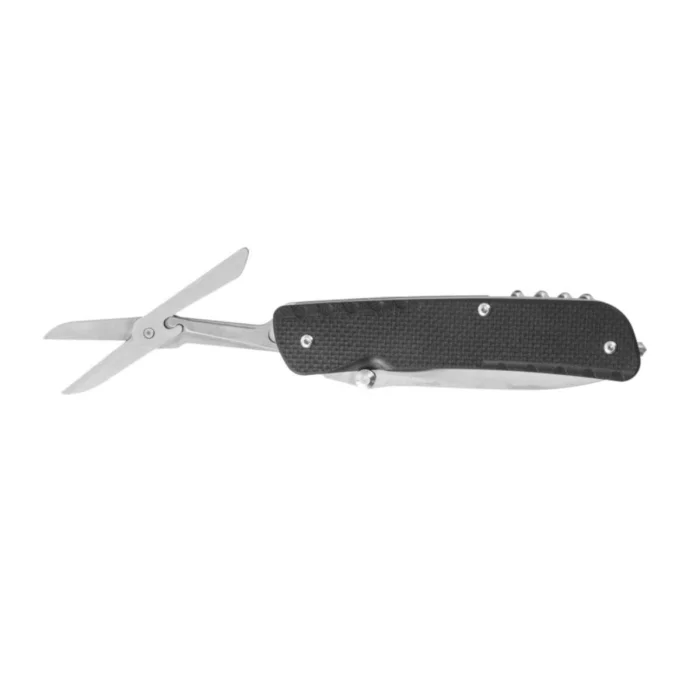
Ruike (founded 2014) is the second key brand in the emergency knife cluster and dominates the folder segment in the range. Specialists: the M195 rescue knife with integrated glass breaker and seatbelt cutter as a tactical rescue tool, and the LD43 rescue knife as a folding rescue knife. The extensive EDC lines LD series (LD11, LD21, LD31, LD32, LD41, LD42, LD51) and P series (P127, P831, P873, P875) offer folding knives in different sizes with partial serration – ideal for EDC with emergency reserve. Steel is mostly 14C28N or Beta+; processing mid-range with excellent price-performance ratio.
Camillus, Morakniv & others
Camillus (USA, since 1876) complements with the Animal outdoor knife and the GB-8B folding knife. Morakniv is represented with the Mora 2000 S Hi-Vis Orange drive-hunt/mushroom knife – thanks to the signal colour clearly visible in the first aid kit or rescue backpack. Nitecore delivers with the NTK10 titanium knife an extremely light mini folder for discreet EDC with rescue aspect.
Who is an emergency knife made for?
- ✓ EMS personnel, rescue services and first aiders with hook-blade requirements
- ✓ Fire department and mountain rescue with glass breaker and seatbelt cutter needs
- ✓ Drivers as a rescue tool in the glove compartment or trunk emergency kit
- ✓ Preppers as a complement to first aid equipment
- ✓ Outdoor enthusiasts and mountaineers as a specialised rescue tool alongside the outdoor knife
- ✓ EDC users with need for emergency reserve in folder format
- ✓ Security personnel and bodyguards needing one-hand operable rescue tools