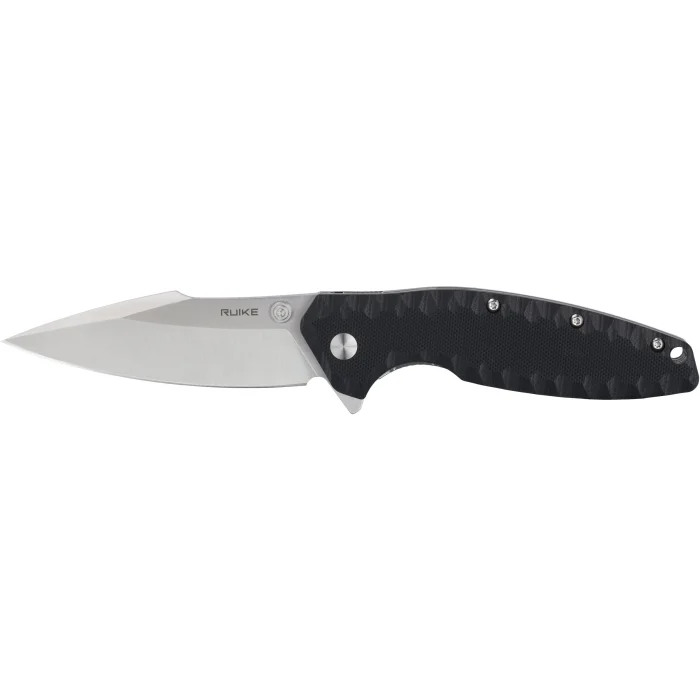
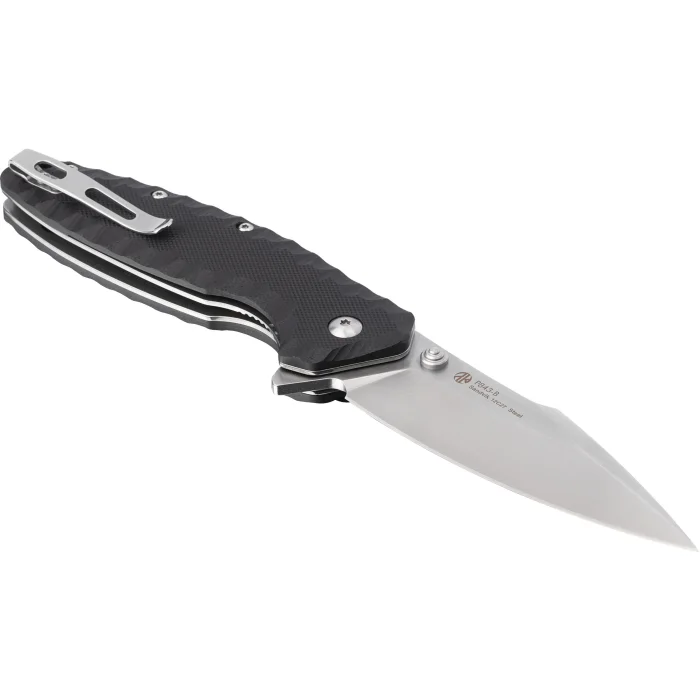
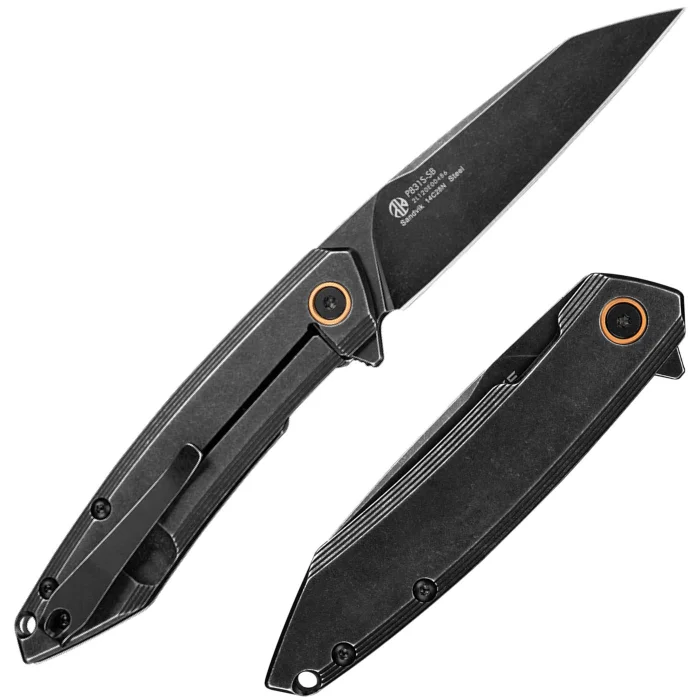
What defines a one-handed knife?
- Folding knife with a one-hand opening mechanism – thumb stud, thumb hole or flipper tab
- Lock against unintentional closing – liner lock, frame lock or lockback
- Blade lengths usually 6 to 9 cm – carriable in pocket, on belt or in backpack
- Blade steels from 14C28N (Ruike) to MagnaCut (Gerber Fastball)
- Handle materials: G10, aluminium, titanium, stainless, bamboo, micarta
- Freely available and carriable in Switzerland (Article 4 of the Weapons Act, no justified reason required)
When does a one-handed knife fit?
A one-handed knife sits at the intersection of two worlds: as compact and reliable as a classic folding knife, but as quickly available as a fixed blade – ideally pulled, deployed and ready to use in under a second. Classic fields of use: everyday carry (EDC) for packaging, cords, apple; outdoor and camping (preparing tinder, working tent stakes, general-purpose tasks); tactical use (police, fire, EMS); industry and workshop (cutting material when the second hand holds the workpiece).
If you need multiple tools in one device (screwdriver, scissors, corkscrew), a Swiss Army Knife is the right choice. For maximum load capacity in bushcraft, survival and hunting, take a fixed blade. For a tactical gutting knife or a heavy outdoor task, a hunting knife. The one-handed knife is the pocket-ready EDC choice – always with you, instantly open, cleanly closed.
Opening mechanisms at a glance
Three main mechanisms enable one-handed opening. These three differ in speed, habit and ergonomics:
| Mechanism | Function | In our range |
|---|
| Thumb stud | Small stud on the side of the blade, swung out of the handle with the thumb | Gerber StrongArm family, Ruike LD series, Camillus |
| Thumb hole | Hole in the blade, swung with the thumb – classic Spyderco style | Selected Gerber and Camillus models |
| Flipper tab | Small tab on the blade spine, deployed with the index finger – often with ball bearing (IKBS) | Gerber Fastball MagnaCut, Ruike Hussar P121, Ruike titanium series |
| Wave feature | Hook-like element on the blade spine that opens the blade as it’s pulled from the pocket | Specialised tactical models |
| Spring-assisted | Spring-supported deployment after manual push by thumb or flipper – not to be confused with switchblade | Selected tactical models |
Important: Spring-assisted knives are not switchblades. With spring-assisted, the blade must first be moved manually past a tipping point, after which the spring takes over. With switchblades (automatic knives), the blade deploys on pure button press. Switchblades with blades over 5 cm are prohibited in Switzerland; spring-assisted one-handed knives are legal.
Lock systems compared
The lock system prevents the blade from unintentionally closing during use. Four systems dominate our range:
| Lock | Function | Strengths & weaknesses |
|---|
| Liner lock | Spring-loaded inner liner rail snaps behind the blade, released with thumb | Light, compact, one-hand closable – standard in EDC |
| Frame lock | Like liner lock, but the handle scale itself acts as the lock | Very robust, ideal for titanium folders – Ruike titanium series |
| Lockback | Rocker on the spine snaps into a blade notch, released with two-handed press | Very stable, classic – often two-handed to close |
| Button / plunge lock | Button-like lock on the side of the handle – released with one press | Fast, ergonomic – premium folders, slightly more dirt-prone |
For everyday EDC, liner lock is the uncomplicated standard choice. For robust outdoor use and higher load, we recommend frame lock (titanium or stainless). Lockback is the classic safe choice for collectors and traditional folders.
What to look for when buying
Five factors decide which one-handed knife fits your use:
-
Blade length – 5 to 7 cm for compact EDC cuts (packaging, apple, cords), 7 to 8 cm for general-purpose outdoor and camp, over 8 cm for robust survival and tactical use. Blades over 12 cm are rare and target tactical applications.
-
Opening mechanism – Thumb stud is universal and familiar, flipper tab with ball bearing is faster and more audible, thumb hole is classic Spyderco-style. Which mechanism suits you is a matter of habit and taste.
-
Lock system – Liner lock for EDC, frame lock for outdoor and load, lockback classic and robust, button lock fast and ergonomic.
-
Blade steel – 14C28N (Ruike standard) as a stainless all-rounder, MagnaCut (Gerber Fastball) as a premium powder steel with maximum edge retention, AUS-8 or 7Cr17MoV as mid-range with good price-to-performance.
-
Handle material – Aluminium and G10 are the EDC standards (light, grippy). Titanium is premium for frame-lock folders (very robust, corrosion-resistant, light). Stainless steel is classic and affordable. Bamboo and micarta are aesthetic, warm natural materials.
For a complete overview of all knives, see the main category Knives & Tools; sister filters under folding knives, fixed blade and hunting knives.
Brands in our range
Gerber – American EDC and tactical
Gerber Gear (Portland, Oregon, USA, since 1939) is the broadest brand in the one-handed knife range. Highlight: the Fastball MagnaCut with premium powder steel, flipper tab and IKBS ball bearings – one of the fastest folders in our range. Plus the LST Mini series in four colours (grey, black, lichen green, mustard yellow) as an ultralight EDC classic, the Flatiron as a striking cleaver folder (Dessert Tan and micarta), the Order as a tactical one-hander, the Sumo EDC, Quadrant Bamboo with a warm bamboo handle, Scout Micarta, the Remix in FE and Tactical, the Ayako in silver and the compact Minisada.
Ruike – Chinese premium mid-range
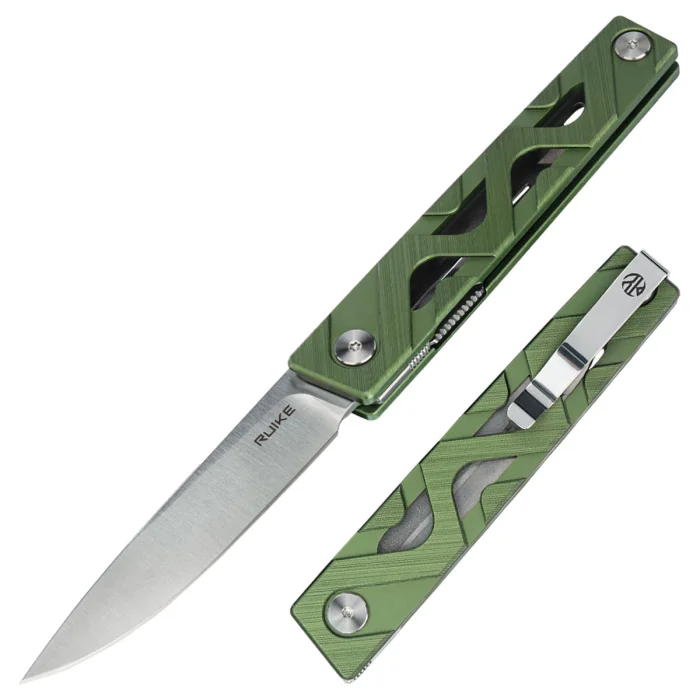
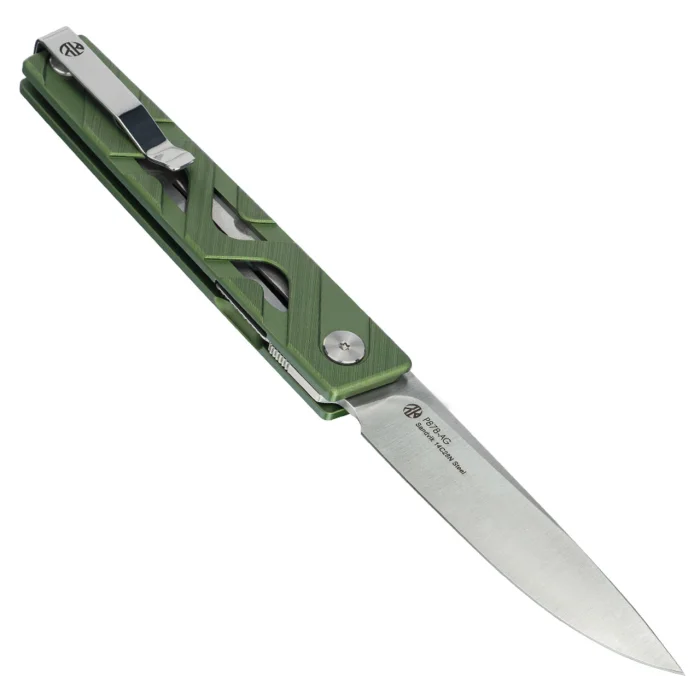
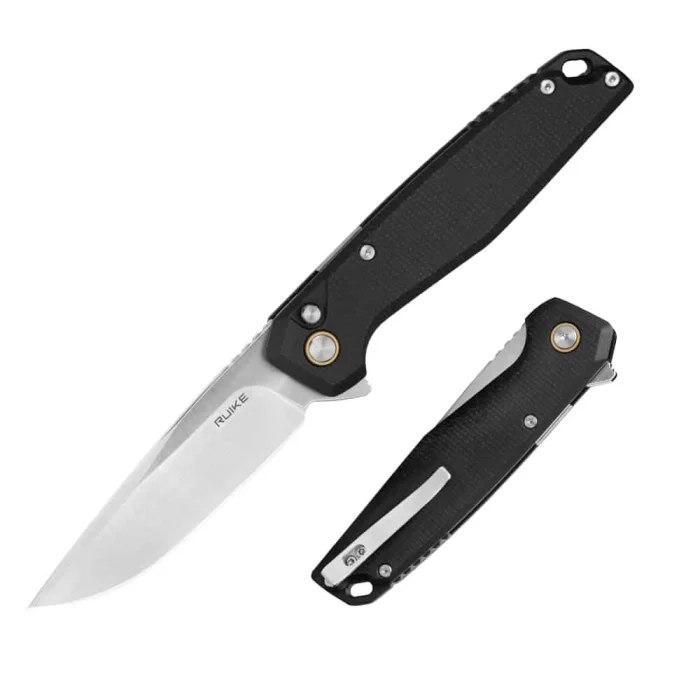
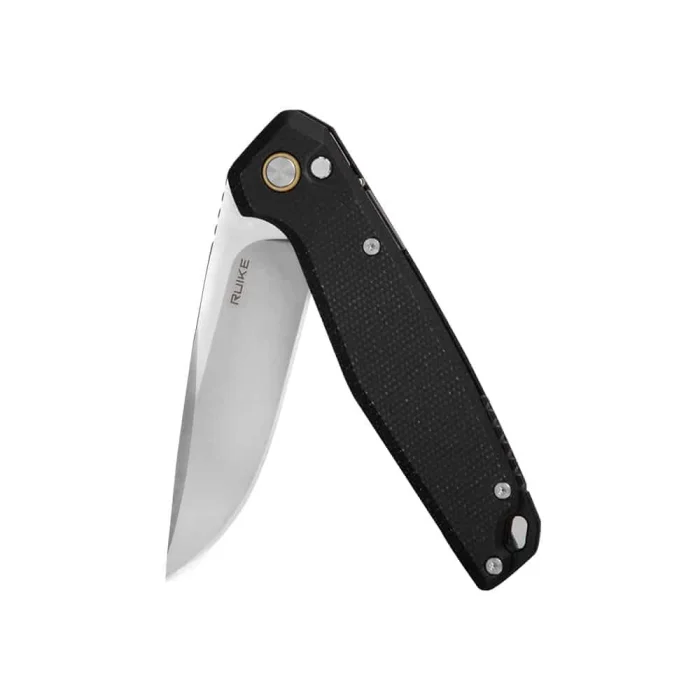
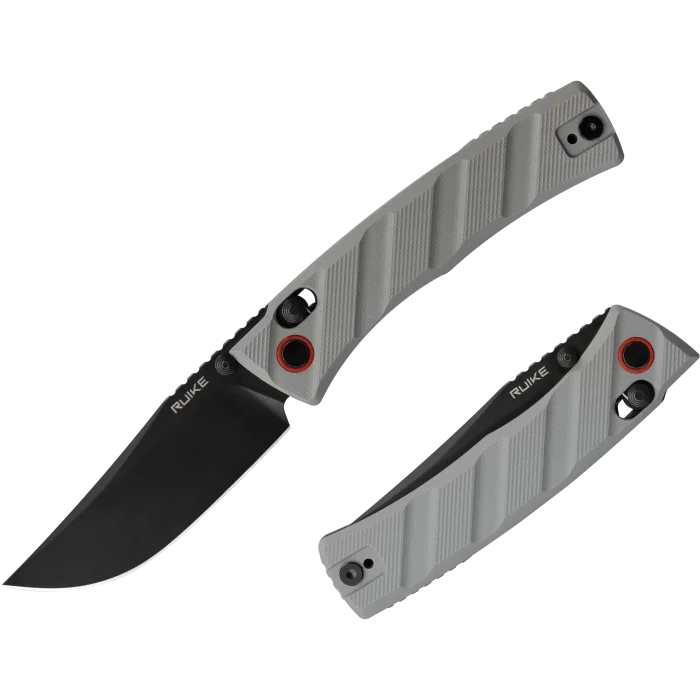
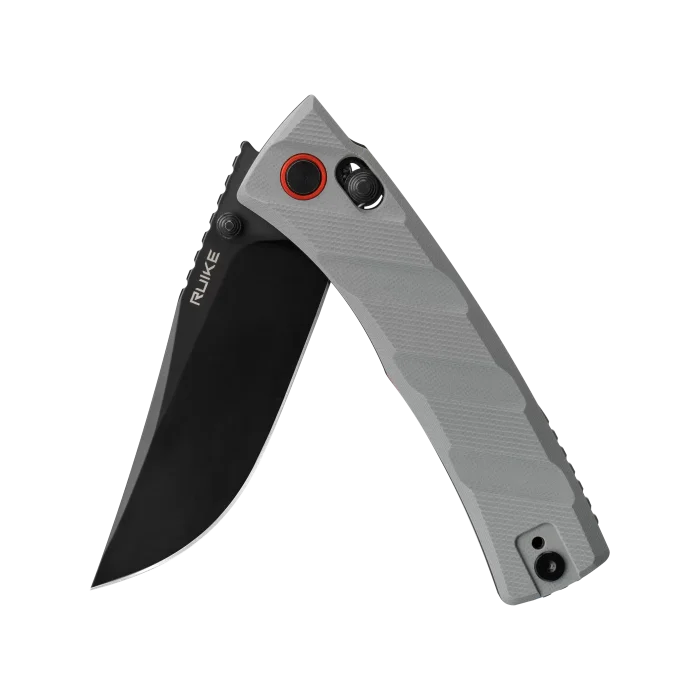
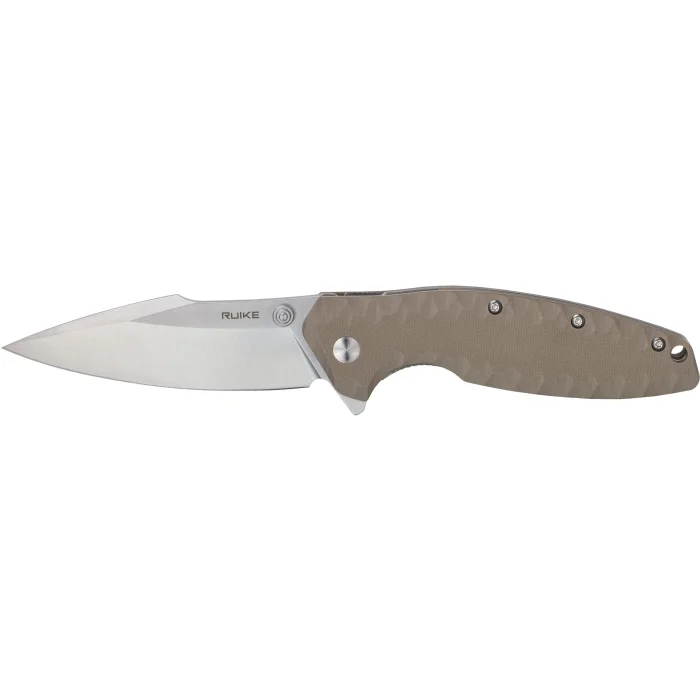
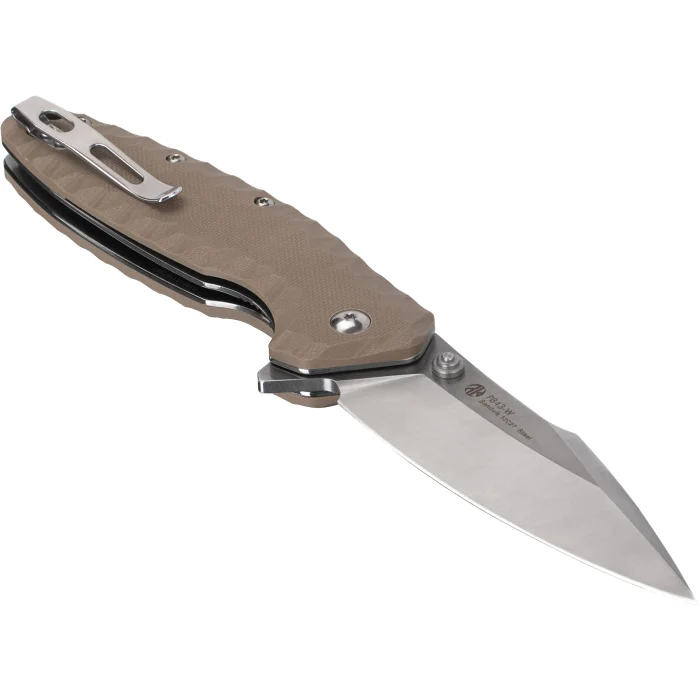
Ruike (founded 2014) is the focus of the one-handed knife range with over 20 models. Three focal points: First, the LD series as compact EDC folders with stainless handle (LD11, LD21, LD31, LD32, LD41, LD42, LD51 and the LD43 rescue knife with glass breaker and seatbelt cutter). Second, the Hussar P121 family in black and green as robust outdoor folders. Third, the premium titanium series (M108-TZ, M121-TZ Hussar, M875-TZ) with titanium frame lock, Beta-Plus steel and IKBS ball bearings. Plus the Fang P105, P108-SB/SF, P122-MB/MG, P123-MB and D191-B as robust all-rounders. Blade steel mostly 14C28N Sandvik or proprietary Beta+ steel.
Camillus – American traditional manufacturer
Camillus (USA, founded 1876) is represented in the range with five folder models: the Centerfire 30-30, the GB-8B, the Guise 7.25 folding knife, the compact Tanto 2 with tanto blade, and the TRC folding knife. Character: traditional American design, mid-range price and solid build.
Nitecore – premium titanium mini folder
Nitecore (better known for flashlights) is represented in the range with the NTK10 titanium knife – a compact premium mini one-handed knife with titanium handle and fine blade. Ideal as an ultralight EDC companion for discreet everyday carry.
BCB International – British outdoor specialist
BCB International (Cardiff, UK, since 1854) is one of the most traditional British outdoor brands and represented in our range with the Mighty One-Hand Mini Knife – a compact, very affordable entry-level one-handed knife for survival kits and emergency sets.
Who is a one-handed knife made for?
- ✓ EDC carriers needing a reliable folder for everyday pocket use
- ✓ Outdoor enthusiasts and hikers as a compact all-rounder on belt or backpack
- ✓ Tradespeople and industry pros for instant one-handed cutting at the workpiece
- ✓ Security personnel and EMS (glass breaker, seatbelt cutter on Ruike LD43)
- ✓ Collectors of premium titanium folders (Ruike M108-TZ, M121-TZ, M875-TZ, Nitecore NTK10)
- ✓ Hunters and anglers as a secondary knife in the backpack
- ✓ Gift seekers with individual colours (Gerber LST Mini in 4 colours)